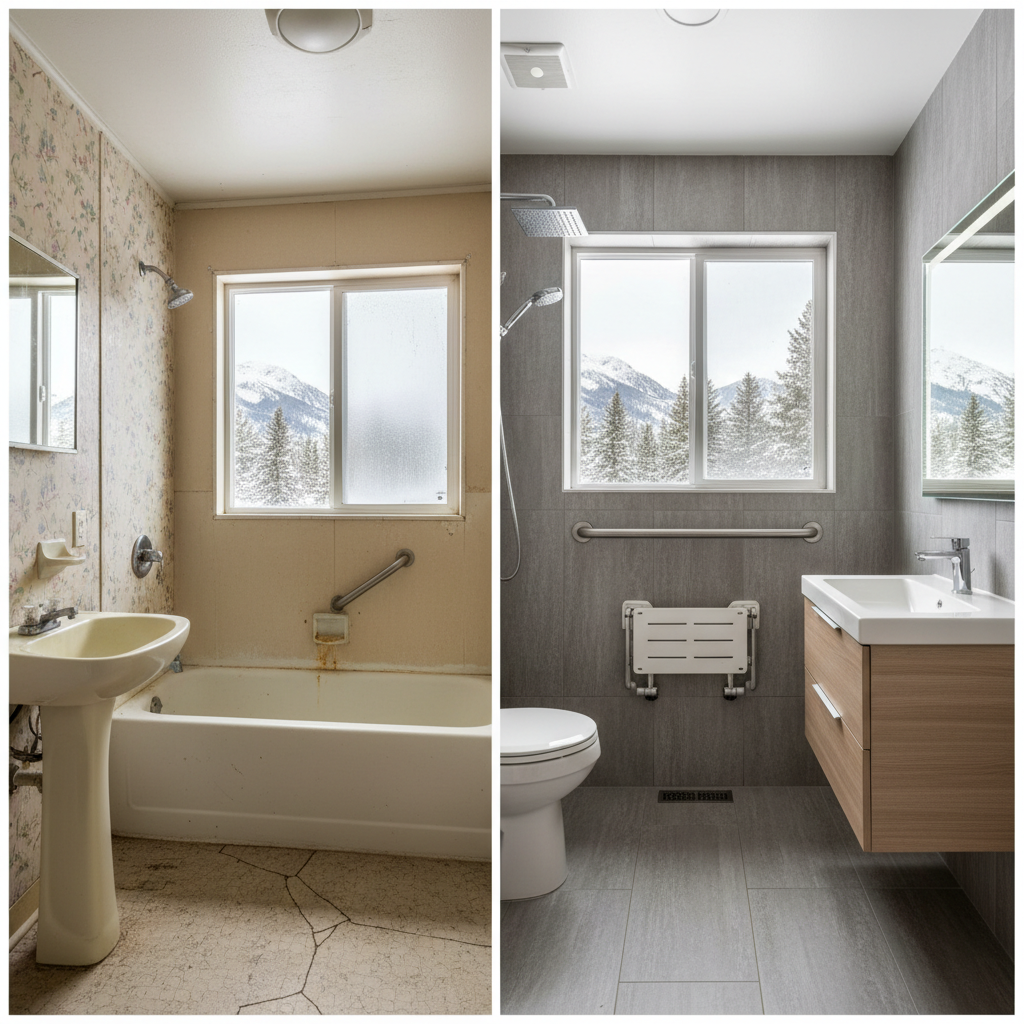
Alright, let's talk about making your bathroom work for everyone, especially if getting around is a bit tougher these days. I see a lot of folks here in Bozeman trying to figure out the best way to approach an accessible bathroom remodel, and two options always pop up: the roll-in shower and the walk-in tub. They both aim for accessibility, sure, but they're pretty different animals. What works best for you really depends on your specific needs, your house, and, of course, your budget.
Roll-In Showers: The Smart Money Bet
When someone asks me about true accessibility, my mind usually jumps straight to a roll-in shower. So, what exactly is one? It's exactly what it sounds like: a shower with no curb or lip at all. This means a wheelchair or walker can roll right in without any obstruction. You'll usually find the floor slopes gently towards the drain to keep the water contained. Sometimes it's a full enclosure with a door; other times, it's an open concept with just a shower curtain or a partial glass panel.
From a practical standpoint, these things are incredibly versatile. You can get a built-in bench, grab bars exactly where you need them, and a handheld shower head. They're also fantastic for caregivers who might need to assist someone. Cleaning is usually pretty simple because there aren't a lot of tricky nooks and crannies, especially if you pick larger format tiles or solid surface panels for the walls.
Cost-wise, a custom roll-in shower can really vary. You're looking at demolition, new plumbing for the drain's new spot, waterproofing the entire floor and walls, and then all the finish materials like tile or solid surface. For a decent-sized one, you're probably starting around $10,000 and can go up significantly depending on your chosen finishes and features. Durability? Excellent, if it's built right. We're talking about a fully waterproofed system designed to take a beating. Maintenance is pretty low – just regular cleaning, like any other shower, really.
And how do they look? Modern roll-in showers can appear really sleek and open up a bathroom, which is a huge plus in some of our smaller Bozeman homes, especially those older bungalows near the University district. They don't scream 'hospital room' anymore; they can actually be quite beautiful, wouldn't you agree?
Walk-In Tubs: Comfort or Complication?
Now, let's talk about walk-in tubs. These are tubs with a watertight door that lets you step in without having to lift your leg over a high tub wall. Once you're inside, you close the door, fill the tub, bathe, drain it, and then open the door to get out. Many even come with jets for hydrotherapy, which sounds pretty nice, right?
Here's where things get a bit more complicated, though. The biggest issue I hear about from clients who've had them or thought about them is the wait time. You have to get in, close the door, and then wait for the tub to fill. Then you bathe. Then you have to wait for it to drain completely before you can open the door and get out. That's a lot of sitting in a cold tub, just waiting. For someone with limited mobility, that can be uncomfortable and even dangerous if they get chilled easily.
The cost of the tub unit itself can range from $3,000 to $10,000 or more, and that's not even counting installation. Installation involves plumbing, electrical for those jets, and making sure the floor can handle the weight of a full tub (which is a lot of water!). Total installed costs usually land in the $8,000 to $15,000 range, sometimes even higher. Durability is generally good for the tub unit itself, but the seals on the door are critical and can be a point of failure over time, potentially leading to leaks if not maintained or if they simply wear out.
Maintenance involves keeping those seals clean and free of debris. Appearance-wise, they tend to be bulky. They definitely take up more space than a standard tub and can make a small bathroom feel even smaller. They also just look like a specialized piece of equipment, which isn't always the aesthetic people are going for in their homes.
My Recommendation for Bozeman Homeowners
If you're asking me, for most situations – especially for long-term accessibility and ease of use – a roll-in shower is almost always the better choice. It offers true independence, is safer, and honestly, it's more versatile for everyone in the household. You don't have that cold wait time, and it's much easier for a caregiver to assist if needed. Plus, if you ever sell your home, a beautifully designed roll-in shower is a much more appealing feature than a walk-in tub to a broader range of buyers.
I've seen the difference it makes. A well-designed roll-in shower, perhaps with a linear drain and some thoughtful tile work, can be a real asset. It's not just about meeting a need; it's about enhancing your quality of life and the value of your home. We've done plenty of these at Treasure State Kitchen & Bath, and the feedback is consistently positive. You get a functional, beautiful space that works for you, now and in the future.